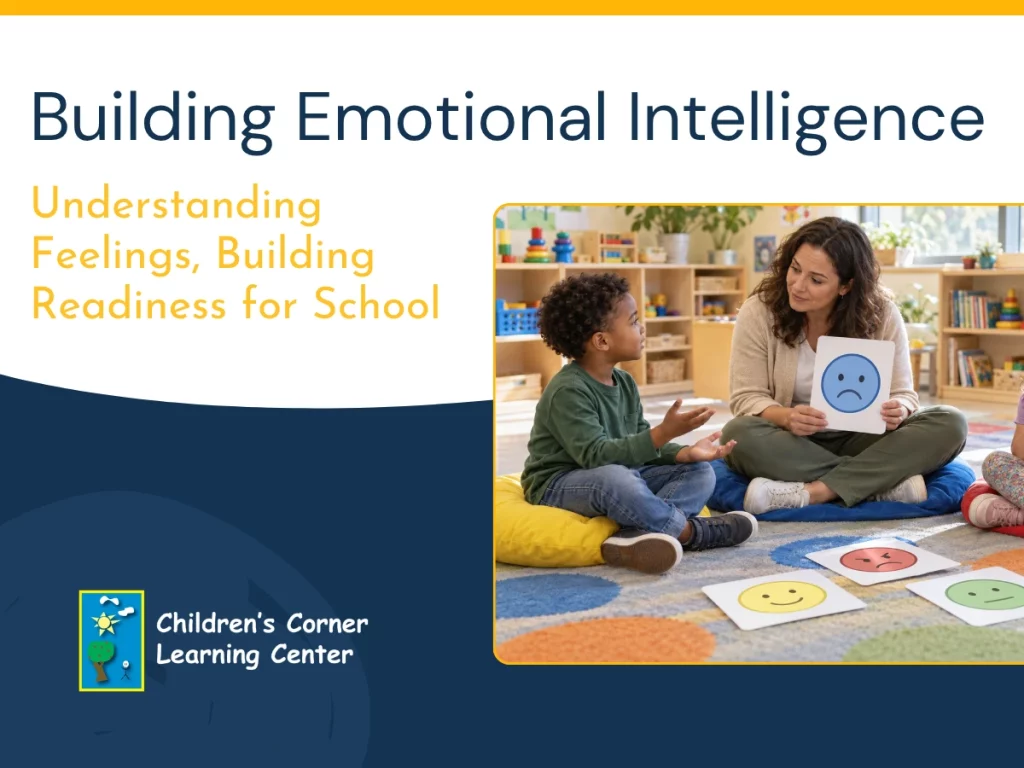
Preschool on Westchester Ave can help children prepare for kindergarten by supporting more than early academic skills. Learning to recognize emotions, communicate needs, build friendships, manage frustration, and participate confidently in a group are also important parts of school readiness.
At Children’s Corner Learning Center, preschool experiences are designed to support social skills, confidence, independence, and the abilities children need as they approach kindergarten. Through purposeful activities, responsive guidance, and opportunities to learn alongside others, children can strengthen emotional intelligence while building positive attitudes toward learning and classroom participation.
Kindergarten Readiness in White Plains: Building Emotional Skills for School
Kindergarten readiness in White Plains includes academic, physical, social, and emotional development. Knowing letters, numbers, colors, and shapes can be valuable, but children also benefit from learning how to participate in a classroom community. Emotional intelligence supports this transition by helping preschoolers begin to understand what they are feeling and how those feelings may influence their actions. A child who can communicate frustration, ask for help, or recover after a disappointment is developing skills that can make classroom experiences more manageable.Recognizing and Expressing Feelings
Preschool offers many natural opportunities to introduce emotion language. Educators can help children identify feelings such as happiness, sadness, excitement, frustration, or worry while encouraging appropriate ways to express them. Over time, these experiences can help children:- Put simple feelings into words
- Communicate needs to adults and peers
- Begin recognizing emotions in others
- Practice calming strategies with guidance
- Understand that different situations can create different feelings
Preparing for the Social Side of Kindergarten
Kindergarten often brings larger groups, new expectations, shared materials, transitions, and greater independence. Preschool experiences can help children become familiar with many of these social demands. Group play, classroom discussions, collaborative activities, and daily routines give children repeated opportunities to practice listening, taking turns, waiting, sharing ideas, and working alongside others. Children’s Corner identifies social development, confidence, independence, and kindergarten preparation as important elements of its preschool program. When children practice these abilities consistently, they can approach their next classroom with a stronger foundation for participating, communicating, and learning in a group.Westchester Ave Daycare: Turning Everyday Moments Into Social Learning
A Westchester Ave daycare environment can provide opportunities for emotional learning throughout the entire day, not only during structured lessons. Preschoolers encounter moments that require patience, cooperation, communication, flexibility, and problem-solving as they play, eat, transition between activities, and interact with others. These everyday experiences make emotional development practical and meaningful.Learning Through Relationships
Young children often develop social understanding through interactions with trusted adults and peers. An educator can model respectful communication, help children work through disagreements, acknowledge feelings, and guide them toward appropriate responses. For example, when two children want the same material, the situation can become an opportunity to practice waiting, expressing a preference, considering another child’s needs, and finding a solution. The goal is not to prevent every disagreement. Appropriate guidance can instead help children develop the skills to navigate increasingly complex social situations.Why Predictable Routines Matter
Consistent classroom routines can also support emotional confidence. Knowing what usually happens next can make the preschool day feel more understandable and manageable, especially during transitions. Regular routines may give children opportunities to practice:- Moving from one activity to another
- Following age-appropriate classroom expectations
- Caring for personal belongings
- Participating in group experiences
- Completing simple responsibilities
- Becoming increasingly independent
Child Development in White Plains, NY: Growing Confidence and Self-Regulation
Supporting child development in White Plains, NY means recognizing that preschoolers are developing across several interconnected areas. Language, movement, thinking, relationships, independence, and emotional regulation influence one another throughout early childhood. For example, a child building stronger communication skills may become better able to explain a problem rather than react immediately. A child gaining confidence in classroom routines may feel increasingly comfortable trying an unfamiliar activity.Self-Regulation Develops Gradually
Preschoolers are still learning how to manage strong emotions, impulses, and changes in expectations. Self-regulation develops over time, through repeated experiences, and with supportive adult guidance. Educators can help children practice strategies such as pausing before reacting, using words to describe a concern, taking turns, listening to another perspective, or trying again after something feels difficult. Success does not mean a child never becomes upset. Progress may look like recovering more comfortably from disappointment, accepting support, or gradually using a previously modeled strategy.Confidence Grows Through Participation
Emotional development is also closely connected with confidence. Children need opportunities to make choices, contribute ideas, attempt tasks, and experience the satisfaction of completing something independently. A supportive preschool environment can encourage children to participate without expecting perfection. Creative projects, early literacy experiences, hands-on exploration, group activities, and play can all provide opportunities to make decisions and solve age-appropriate problems. Children’s Corner describes its curriculum as supporting curiosity, creativity, confidence, socialization, emotional growth, and developmental milestones. As children experience both success and manageable challenges, they can begin to see themselves as capable learners who can ask questions, make mistakes, adjust, and keep going.Emotional Intelligence as a Foundation for the Kindergarten Transition
The transition to kindergarten introduces children to a new stage of learning, with changing routines, teachers, classmates, expectations, and responsibilities. Emotional intelligence can help children respond to these changes with greater confidence and adaptability. Academic preparation remains important, but kindergarten readiness also involves being able to function within a learning community.Skills That Carry Into the Classroom
Preschool experiences can help children practice abilities they will continue using well beyond their first day of kindergarten, including:- Listening while another person speaks
- Asking for help when something feels difficult
- Joining group activities
- Managing disappointment with support
- Cooperating with classmates
- Following classroom routines
- Approaching unfamiliar tasks
- Expressing ideas and feelings appropriately