Infant care on Bloomingdale Rd can provide young children with a nurturing environment where early learning begins through safe, meaningful exploration. During infancy and toddlerhood, sensory experiences can help children engage with the world around them while supporting developing motor, communication, cognitive, and social-emotional skills.
At Children’s Corner Learning Center at 120 Bloomingdale Road, age-appropriate learning experiences encourage curiosity through movement, touch, sound, and hands-on discovery. A thoughtful, curriculum-based approach to sensory play can help infants and toddlers build important early foundations while receiving the responsive care, consistency, and individual attention they need during these formative years.
Sensory Play in White Plains and Its Role in Early Development
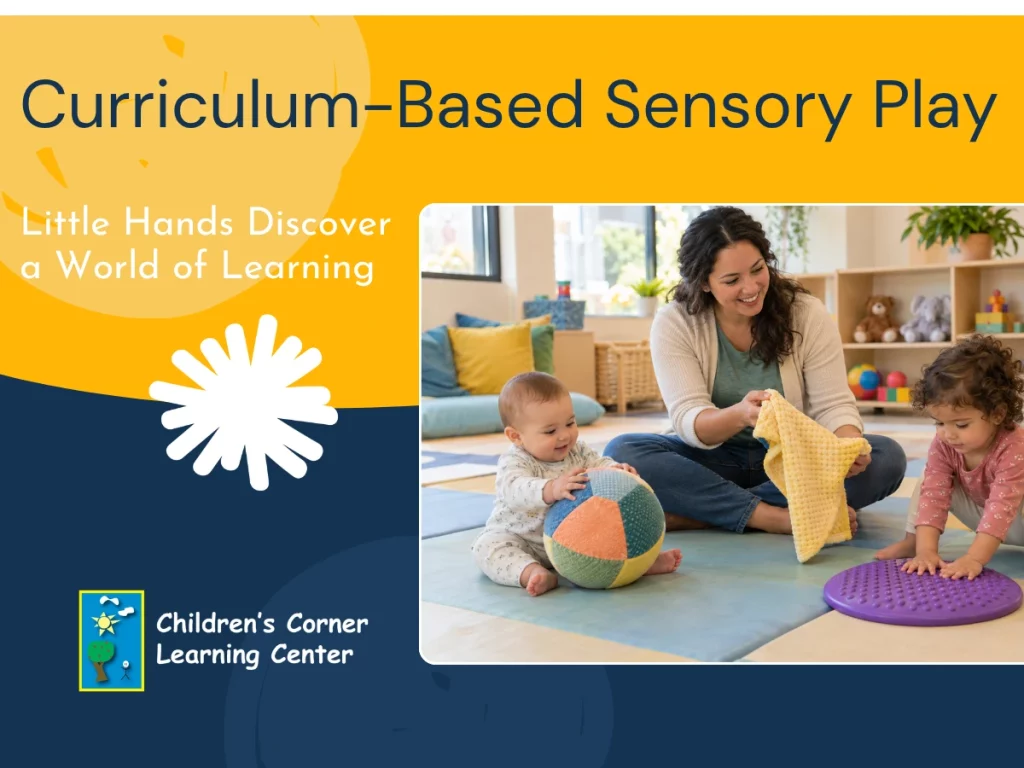
Sensory play in White Plains can play an important role in helping infants and toddlers begin to understand the world around them. At this stage of development, children learn through direct experiences that involve touch, sound, movement, sight, and, where appropriate, taste and smell. These early interactions can support growing awareness, coordination, communication, and curiosity. At Children’s Corner Learning Center, sensory experiences can be incorporated into age-appropriate activities that encourage children to explore safely while receiving responsive guidance from caregivers. Rather than treating sensory play as a separate activity, it can become part of a broader curriculum that supports multiple areas of development.Building Skills Through Hands-On Exploration
Simple sensory experiences can contribute to several areas of early learning. Depending on a child’s age and developmental stage, activities may support:- Fine motor development through grasping, reaching, squeezing, and manipulating safe materials
- Gross motor development through movement, stretching, crawling, and physical exploration
- Language development as caregivers introduce words connected with textures, sounds, colors, and actions
- Cognitive growth by encouraging children to notice differences, make connections, and respond to cause and effect
- Social-emotional development through positive interactions with trusted caregivers during shared activities
Supporting Individual Development
Infants and toddlers do not all respond to sensory experiences in the same way. Some may eagerly explore a new texture, while others may need additional time and reassurance before engaging. A thoughtful early childhood environment respects these differences and allows children to participate at a comfortable pace. By observing each child’s responses and interests, caregivers can provide experiences that are both engaging and developmentally appropriate. This individualized approach keeps sensory play purposeful, safe, and connected to the broader learning goals that support children in their earliest years.Toddler Care in White Plains, NY: Building Skills Through Guided Exploration
High-quality toddler care in White Plains, NY can provide young children with the structure, encouragement, and opportunities they need as they become more independent. During the toddler years, children develop new physical abilities, expand their vocabulary, test ideas, and learn how to interact with others. Guided exploration gives them space to make discoveries while benefiting from attentive caregivers’ support. At Children’s Corner Learning Center, developmentally appropriate activities can help toddlers strengthen emerging skills through purposeful play and everyday experiences. A balanced approach lets children explore their interests while educators introduce activities that support key areas of growth.Encouraging Independence Through Everyday Learning
Toddlers often want to do more for themselves, making this an important time to build confidence and self-help skills. Simple routines and classroom experiences can create opportunities to practice:- Making age-appropriate choices
- Putting away materials after play
- Feeding themselves with increasing independence
- Following simple directions and routines
- Attempting tasks before receiving assistance
Strengthening Communication and Problem-Solving
Guided exploration also creates natural opportunities for language and cognitive development. Caregivers can describe what children are doing, introduce new vocabulary, ask simple questions, and encourage children to express their needs and ideas. Activities involving stacking, sorting, building, matching, movement, and imaginative play can encourage toddlers to experiment and solve simple problems. When something does not work as expected, children have opportunities to adjust their approach and try again. By combining responsive care with purposeful exploration, a toddler program can support children as they develop greater independence, communication skills, coordination, and confidence. These early experiences provide a strong foundation for continued learning as children progress into the preschool years.Early Learning Center in White Plains: Creating a Purposeful Learning Environment
An early learning center in White Plains should provide more than a safe place for children to spend their day. For infants and toddlers, the environment itself can become an important part of the learning experience. Thoughtfully arranged spaces, consistent routines, and developmentally appropriate materials can help young children feel secure while encouraging curiosity, movement, and discovery. At Children’s Corner Learning Center, creating a purposeful environment means considering how children interact with the people, materials, and spaces around them. When learning areas are designed with early development in mind, everyday experiences can support meaningful growth across several areas.Creating Spaces That Encourage Exploration
Infants and toddlers benefit from environments that allow them to explore safely and at their own pace. Age-appropriate materials can encourage children to reach, grasp, move, observe, listen, and experiment. A purposeful early learning environment may provide opportunities for:- Active movement and physical development
- Quiet exploration and focused play
- Early language and communication experiences
- Creative and sensory discovery
- Positive interactions with caregivers and peers
Combining Predictability With New Experiences
Consistent routines are especially valuable during the earliest years. Familiar patterns around meals, rest, transitions, and play can give children a reassuring sense of what comes next. Within that structure, educators can introduce new materials and experiences that encourage children to explore unfamiliar ideas with confidence. Responsive caregivers are also central to this environment. By observing each child’s interests, cues, and developmental progress, educators can adapt activities and provide appropriate guidance. Together, intentional spaces, predictable routines, and responsive interactions create an environment where infants and toddlers can explore, develop new abilities, and build a positive relationship with learning from an early age.How Curriculum-Based Activities Support Infants and Toddlers
Curriculum-based activities give infants and toddlers meaningful opportunities to learn through experiences carefully matched to their age and developmental stage. During these early years, learning happens through movement, repetition, observation, interaction, and play. A well-planned curriculum helps ensure that these everyday experiences support clear developmental goals while still allowing children to explore at a natural pace. At Children’s Corner Learning Center, age-appropriate learning experiences can help children build skills gradually while remaining engaged and comfortable in their surroundings.Supporting Development Across Multiple Areas
For infants and toddlers, one activity can often support several areas of development at once. For example, reaching for a textured object may strengthen coordination while also encouraging sensory awareness and concentration. Listening to songs or participating in simple group activities can introduce language, rhythm, and social interaction. Curriculum-based experiences may support:- Physical development through reaching, crawling, walking, grasping, and manipulating objects
- Communication skills through songs, stories, gestures, and everyday conversations
- Cognitive development through repetition, simple problem-solving, and cause-and-effect experiences
- Social-emotional growth through responsive interactions, familiar routines, and shared play
- Creativity and curiosity through open-ended materials and opportunities to explore