Families exploring social-emotional learning preschool in Purchase, NY, often wonder what progress looks like after the first few weeks. A child may recognize their classroom and teachers but still need support joining play, handling disappointment, or saying goodbye. Building comfort takes time, and social confidence grows through everyday experiences with caring adults and peers.
At Children’s Corner Learning Center, the Purchase program focuses on communication, social development, and managing emotions. Understanding these developing skills can help families recognize meaningful progress beyond a smooth drop-off, from seeking comfort to finding a way into a friend’s game.
Daycare Programs in Purchase, NY: Recognizing Progress Beyond Settling In
The first month often brings practical questions: Is my child eating, resting, and getting used to the routine? As routines become more familiar, families may start wondering about friendships and emotional confidence. Daycare programs in Purchase, NY, can help parents understand this next stage by sharing specific observations about how children participate.
Progress does not follow a monthly deadline. A child can enjoy preschool and still have difficult mornings or need help with a familiar transition.
Look for Connection Before Independence
An important sign of growing trust is a child seeking support when they need it. Walking toward a teacher after a disagreement or accepting comfort during goodbye can show that a relationship is developing.
Independence grows alongside that support. Children need opportunities to see adults as reliable before they can confidently handle more situations on their own.
Small signs worth noticing include:
- Bringing a teacher something they want to share.
- Watching a group activity and gradually moving closer.
- Asking for help with a frustrating task.
- Returning to play after receiving comfort.
These observations offer a fuller picture than whether a child cried at drop-off.
Notice Patterns Across the Day
A single difficult moment rarely captures the whole preschool experience. Ask what happened afterward and where your child seemed most comfortable.
For example, a child might struggle when a parent leaves but later spend time building beside a classmate. Another may enter happily yet need extra reassurance before rest time.
Knowing these patterns helps adults decide where support would be most useful.
Make Room for Uneven Days
Tiredness, a changed routine, or an unfamiliar activity can make a previously manageable situation feel harder. Responding with reassurance gives children room to practice again.
The useful question is, “What helped today?” Over time, those answers can reveal growing trust, more confident participation, and an expanding range of ways to handle challenges.
Toddler Social Development in Purchase: From Playing Nearby to Playing Together
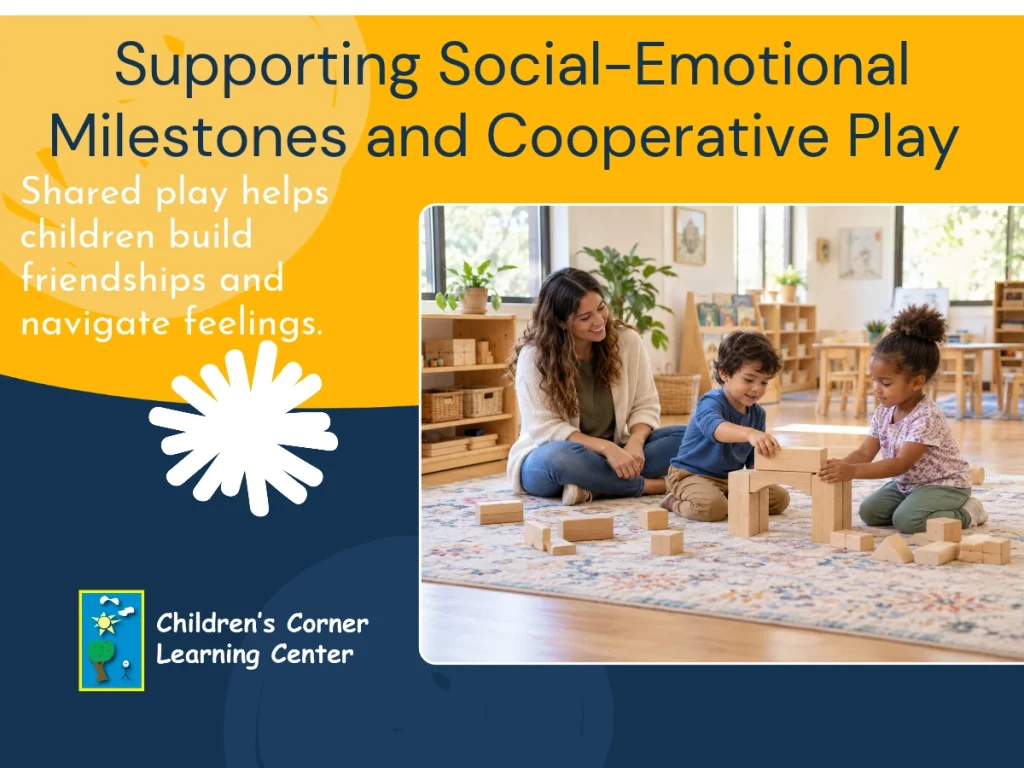
Two toddlers may sit beside each other with blocks, each building a separate tower. Although they are not working on one structure, they may watch, imitate, and become increasingly interested in each other. Supporting toddler social development in Purchase begins with valuing these early connections.
Cooperative play develops gradually. Children may move between playing alone, playing alongside others, and sharing a plan, depending on the activity and how they feel.
Give Connection a Manageable Starting Point
A shared activity does not need to involve a large group. Two children rolling a ball back and forth have a clear way to participate together.
Other approachable invitations include carrying a lightweight basket with an adult nearby or adding blocks to a simple road. Duplicate materials also let children stay close without needing to negotiate over one object right away.
An adult might offer, “You’re both making roads. Would you like to join them?” Either response is acceptable; the invitation creates an opening without demanding friendship.
Offer Words During Difficult Moments
Wanting the same toy can bring strong feelings. A calm adult can acknowledge the wish while keeping a clear boundary:
“You wanted that truck. It’s hard to wait. I won’t let you grab it. We can ask for a turn when Sam is finished.”
The goal is to help children express frustration safely and discover a workable next step. Expecting immediate calm or effortless sharing asks too much of a developing skill.
Help Children Return to Play
Once children are calmer, an adult can support a small repair. They might help rebuild a knocked-over tower or find another role in the game.
A prompted apology alone does not resolve the problem. Concrete actions give children ways to reconnect, while repeated guidance helps them learn that a disagreement does not have to end their time together.
An Early Learning Center in Purchase, NY: Creating Opportunities for Cooperation
Cooperation becomes more meaningful when children have a reason to work together. An early learning center in Purchase, NY, can create those opportunities through activities that invite shared decisions, flexible roles, and contributions from different children.
For preschoolers, the challenge is often coordinating their own idea with someone else’s. Thoughtful adult guidance helps make that process manageable.
Choose Activities With a Shared Purpose
A pretend restaurant provides a useful example. One child may want to prepare food while another wants to serve it. Together, they need to decide where customers sit and how orders reach the kitchen.
Similar opportunities can arise through:
- Building a neighborhood: Children connect their individual buildings with roads.
- Creating a group mural: Each child contributes to a shared scene.
- Caring for pretend animals: Children organize sleeping spaces and feeding routines.
These are examples of how classroom play can invite cooperation. The finished result matters less than the decisions children make along the way.
Coach Without Directing Every Decision
When children disagree, an adult can clearly describe the problem: “You both want to serve the food, and nobody is taking orders yet.”
A brief pause allows children to offer ideas. If they need help, the adult can suggest manageable options, such as dividing the tables or switching roles after an order.
This guidance gives children a process they can use more independently over time.
Recognize What Made the Teamwork Work
Specific feedback helps children understand their contribution. “You held the bridge steady while Mia added the block” explains more than a general “Good job.”
Children’s Corner Learning Center’s Purchase program identifies communication, socializing, and managing emotions as areas of focus within its early childhood approach. Its emphasis on personalized care and family partnerships provides context for supporting these developing abilities.
During a visit, parents can ask how teachers help children enter group play, navigate disagreements, and contribute in ways that match their readiness.
Building a Consistent Partnership Between Home and Preschool
Children experience home and preschool differently. A child who talks freely with family may be quieter in a group, while one who manages classroom routines may need more reassurance after pickup. Sharing observations helps parents and teachers understand these differences without expecting identical behavior in both places.
For families at Children’s Corner Learning Center in Purchase, ongoing conversation can help connect classroom experiences with the support a child receives at home.
Exchange Specific, Useful Details
Broad questions such as “Was it a good day?” can miss the moments that reveal progress. More focused questions make it easier to understand what your child is practicing.
Consider asking:
- “How did my child join play today?”
- “What helped when they became frustrated?”
- “Was there a classmate or activity they returned to?”
- “What words are you using to help with taking turns?”
Families can also share changes in sleep, routines, or home circumstances that may affect the day.
Practice Through Everyday Experiences
Home offers simple opportunities to cooperate without recreating a classroom lesson. Build something together, take turns choosing a song, or give each person a small role in setting the table.
When frustration arises, use clear language that combines empathy with a boundary: “You wanted to keep building. It’s hard to stop. It’s time for dinner, and we can leave your tower here.”
Familiar phrases can make expectations easier to recognize across different situations.
Agree on One Small Next Step
If joining play feels difficult, parents and teachers might focus on helping the child practice one invitation, such as “Can I help?” Keep the goal manageable and review what seems useful.
Social-emotional growth includes learning to seek support, recover from disappointment, and feel connected to others. A steady partnership helps adults notice those changes and respond thoughtfully, while giving the child a consistent message: you belong here, and help is available.
Growing Relationships Beyond the First Month
A preschool friendship may begin with watching from nearby, offering one block, or accepting an invitation to play. These moments are easy to overlook, yet they show children discovering how to belong in a group while expressing their own needs.
Beyond the first month, meaningful progress is found in those everyday connections. With patient support, children can practice handling disagreements, contributing ideas, and returning to play after something goes wrong. Each experience gives them another opportunity to build trust in themselves and the people around them.
Discover a caring place for those connections to grow. Schedule your visit at https://childrenscornergroup.com/book-a-tour/ or call (800) 933-7757.