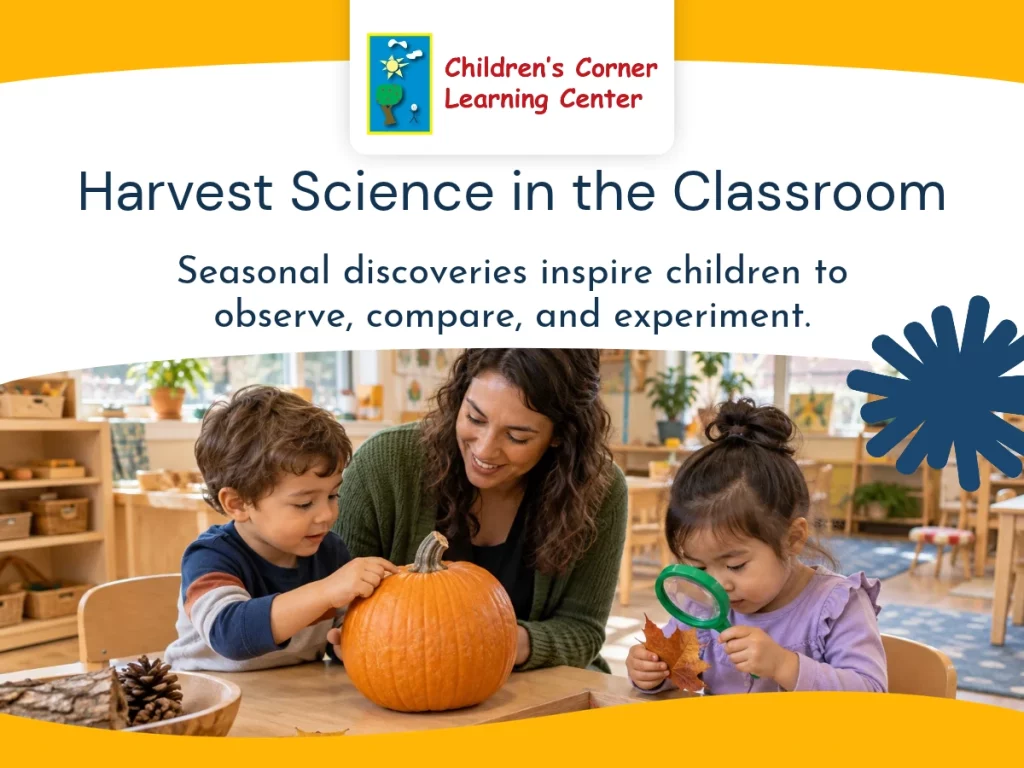
Families exploring STEM learning daycare in Pearl River may find that some of the most meaningful discoveries begin with ordinary autumn materials. A wobbling pumpkin, two leaves with different shapes, or a cardboard ramp can give preschoolers something to investigate. STEM brings together science, technology, engineering, and mathematics, but early experiences can be simple and playful.
With guidance from caring adults, children notice details, compare outcomes, and test ideas. At Children’s Corner Learning Center, we emphasize exploration and individualized learning to build a welcoming foundation for curiosity and help children approach new experiences with growing confidence.
Hands-On Preschool Activities in Pearl River, NY: Turning Harvest Materials Into Investigations
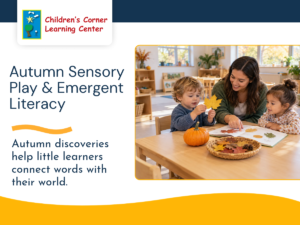
An autumn activity becomes an investigation when children have something to figure out. Will two pumpkins roll the same way? Which leaf is longer? How could we carry pretend apples without dropping them? Hands-on preschool activities in Pearl River, NY, can use these approachable questions to bring early STEM thinking into play. The following examples show how seasonal materials can support purposeful exploration while leaving room for children’s own ideas. Compare, Sort, and Measure Offer a small selection of large leaves for supervised observation. Children might arrange them by color, then discover another way to group them: rounded edges and pointed edges. Changing the sorting rule helps children see the same materials in a new way. A teacher can invite them to explain their choices without requiring one correct arrangement. Simple comparisons can also introduce measurement:- Place two leaves side by side to compare their length.
- Use large blocks to estimate how tall a pumpkin stands.
- Arrange three manageable pumpkins from smallest to largest.
An Early Childhood Center in Pearl River: Helping Children Predict, Test, and Revisit Ideas
Thoughtful teaching gives a playful investigation direction without deciding every step for the child. In an early childhood center in Pearl River, adults can help preschoolers move from “I wonder” to “Let’s find out,” making room for both expected and surprising results. A pumpkin ramp offers a simple example of how this process might unfold. Begin With a Prediction Before rolling a manageable pumpkin down a low, sturdy ramp, ask children what might happen. Will it travel straight, turn, or stop nearby? A prediction is an idea to explore. Children can share it through words, gestures, or by pointing to where they think the pumpkin will stop. Teachers can acknowledge each contribution with a neutral response: “You think it will turn toward the basket. Let’s watch.” Change One Thing and Try Again After the first roll, help children describe what actually happened. Perhaps the pumpkin turned because of its uneven shape. Perhaps it barely moved. For another attempt, keep the pumpkin and starting position the same, but slightly change the ramp’s height. This gives children a clearer opportunity to notice what that particular adjustment does. Useful prompts include:- “What happened when we lifted this end?”
- “Did it stop in the same place?”
- “What would you like to try next?”
Science Exploration for Toddlers in Pearl River: Making Discovery Fit Their Stage
Toddlers can join the spirit of harvest science without following a preschool investigation from beginning to end. For a younger child, discovery may involve repeatedly turning a pumpkin or noticing that a damp leaf bends differently from a dry one. Science exploration for toddlers in Pearl River works best when experiences match children’s developing abilities and attention. Start with a safe opportunity to act, notice, and try again. Offer One Clear Experience A busy table full of materials can make it hard for a toddler to focus. Begin with one manageable object or action. For example, place a large, lightweight fabric leaf on a clear surface and show how moving a piece of cardboard creates a breeze. The toddler can watch the leaf shift, then help repeat the movement. An adult might narrate, “You moved the air. The leaf moved, too.” The explanation stays connected to something the child can observe. Notice the Value of Repetition A toddler may want to repeat the same action many times. Adults can watch for small changes within that repetition. Does the child move the cardboard closer? Pause to check the leaf? Try using both hands? These adjustments can clue you into what has caught their attention. Instead of adding a new challenge right away, give them time to explore the current one. A brief shared discovery can be enough for that moment. Adapt Materials and Participation Choose materials for the individual child, particularly when they still explore by mouthing objects. Avoid loose seeds, dried corn kernels, acorns, and other small items that pose choking risks. Closely supervise natural materials and any water-based exploration. Participation can also take different forms. One toddler may touch an object, another may use a large scoop, and another may watch from beside a trusted adult. Responsive support lets curiosity grow without pressure to handle every texture or complete every activity.Growing Curious Problem-Solvers at Children’s Corner Learning Center
A child who tries a different way to balance a box is practicing more than a building skill. They learn to respond when an idea doesn’t work right away. Another child who asks a friend to hold the box steady is discovering how cooperation can help solve a problem. These moments connect early STEM with the broader goal of helping children become confident participants in learning. A Foundation in Individualized Care Children’s Corner Learning Center in Pearl River describes an approach centered on self-discovery, personalized attention, and academic, social, and emotional growth. Located at 1 Blue Hill Plaza, the center gives children opportunities to explore at their own pace. That philosophy matters in early STEM because children approach unfamiliar experiences differently. Some begin by building, others by watching, and others by asking questions. Thoughtful support helps each child find a way into the learning. Recognizing Progress Beyond a Finished Project A completed craft can be enjoyable, but an investigation can show progress in other ways. Families might notice a child:- Trying a second approach after something falls.
- Looking closely before deciding what to do.
- Explaining why they chose a particular material.
- Asking someone else to help test an idea.