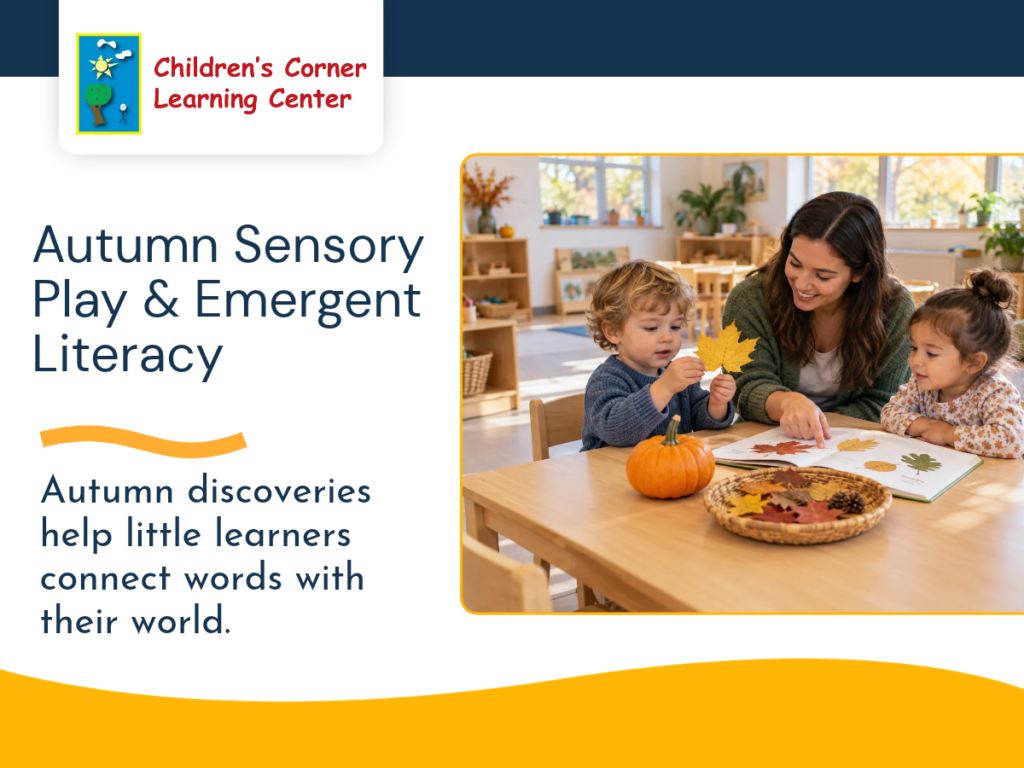
Looking for an early literacy preschool in Scarsdale, NY, often starts with a simple question: How will my toddler begin learning to read? Long before children recognize letters, they build language through everyday discoveries. An autumn leaf that feels “crunchy,” a smooth pumpkin, or a familiar seasonal rhyme gives them something to notice, name, and talk about.
These small exchanges help connect words with experiences, laying the groundwork for understanding stories and, eventually, reading. At Children’s Corner Learning Center, hands-on toddler activities support language development through exploration, helping young children find words for the world they’re discovering.
Toddler Sensory Play in Scarsdale: Exploring Autumn Textures and Building Vocabulary
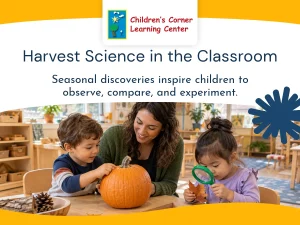
A toddler presses a hand against a pumpkin, then runs a finger along its ridges. An adult nearby offers two words: “Bumpy pumpkin.” This simple exchange captures what makes toddler sensory play in Scarsdale valuable for early language learning. Children have something meaningful to touch and notice, while a caring adult gives them words to describe the experience. Autumn’s changing textures offer plenty of opportunities for these small discoveries, without turning play into a vocabulary lesson.Start With What Your Child Notices
Follow your toddler’s attention. If they keep rubbing a leaf, describe how it feels. If they squeeze soft dough, talk about what their hands are doing. Words connect more easily to meaning when they match an action or sensation happening right now. Try introducing a few useful words:- Texture words: smooth, rough, soft, and bumpy.
- Action words: press, roll, squeeze, and crumble.
- Comparison words: bigger, smaller, softer, and harder.
Add a Little More to Their Words
When a child says “leaf,” an adult might respond, “Yes, a crunchy leaf.” If they say “pumpkin big,” try, “You found a big pumpkin!” These gentle additions model fuller phrases while keeping the focus on the child’s discovery. A gesture or curious glance can also start an exchange; spoken answers are not required.Keep Exploration Comfortable and Safe
Offer large, age-appropriate materials with close supervision, avoiding small objects that could become choking hazards. Some toddlers enjoy unfamiliar textures immediately, while others prefer watching or using a tool first. Giving children time and choice helps keep sensory play inviting. The aim is shared discovery, with new words growing naturally from what interests them.Early Childhood Education in Scarsdale: Connecting Sensory Experiences With Books and Print
After exploring a pumpkin’s smooth skin and deep ridges, a toddler may recognize that same shape in a picture book. Suddenly, the illustration connects to something they have held. In Scarsdale early childhood education, linking hands-on discoveries with books can make stories more meaningful and show children why print matters. For toddlers, these connections begin with noticing familiar objects, enjoying shared reading, and discovering that pictures and written words carry meaning.Bring a Sensory Discovery Into Storytime
Pair an autumn exploration with a short picture book about pumpkins, leaves, or seasonal changes. Keep a familiar, safe object nearby so children can move between the real item and its illustration. An adult might point to a page and say, “There’s a pumpkin like the one we touched.” This helps connect a real experience with its representation in a book. Keep the experience flexible:- Pause when a child recognizes a familiar picture.
- Revisit a favorite page instead of rushing to finish.
- Let children help turn the sturdy pages of a board book.
Give Print a Meaningful Place in Play
A simple label beside a pumpkin or a titled display of leaf artwork introduces print in a familiar setting. Adults can briefly point to the words and explain their purpose: “This says ‘Our Autumn Leaves.’ It tells people about your picture.” Toddlers do not need to memorize the label. The goal is to notice that writing communicates something, just like pictures and spoken words.Let Their Discoveries Become a Book
Create a short homemade book using photographs of a toddler’s autumn explorations. Add a brief description beneath each image, such as “We rolled the pumpkin.” Looking through familiar moments together gives children a personal reason to return to books, building interest in stories long before independent reading begins.Preschool Language Development in Scarsdale: How Teachers Encourage Conversation Through Play
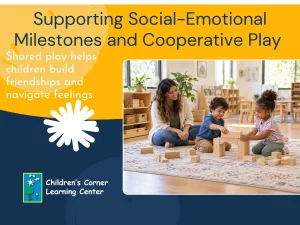
Two children are arranging pretend pumpkins in a play kitchen. One fills a basket while the other reaches for a turn. A teacher sits nearby and helps them find the words to share their plans. Everyday moments like these create opportunities for preschool language development in Scarsdale, helping children practice purposeful conversation. While naming objects builds vocabulary, talking with others also requires listening, responding, taking turns, and making yourself understood. Teachers can support these skills without taking over the play.Make Room for a Response
Young children need time to process what they hear and decide how to respond. Rather than asking several questions in quick succession, a teacher might make one observation: “You’re putting all the pumpkins in that basket.” Then they pause. That space allows a child to contribute a word, gesture, or idea. Following the child’s response keeps the exchange connected to their interests and makes participation feel comfortable.Help Children Talk to Each Other
During shared play, teachers can offer short phrases that children can use with a friend. An autumn pretend market, for example, creates natural reasons to communicate:- Requesting a turn: “Can I use the basket?”
- Offering a choice: “Which pumpkin would you like?”
- Planning together: “Let’s put them over here.”
- Asking for help: “Can you carry this with me?”
Welcome Different Ways of Participating
Some children readily join a conversation; others begin by watching, pointing, or copying an action. A responsive teacher acknowledges each attempt and offers language suited to the child’s stage. With repeated, supportive exchanges, children have opportunities to grow more comfortable expressing needs and sharing ideas. Feeling heard helps make conversation a rewarding part of learning alongside others.Growing Confident Learners at Children’s Corner Learning Center
Confidence often shows itself quietly in early childhood. A toddler points to a picture they recognize, tries an unfamiliar word, or invites a friend into their play. These moments reflect a growing willingness to explore and communicate, supported by adults who notice and respond with care. Children’s Corner Learning Center emphasizes individualized learning within a nurturing environment. Its whole-child approach connects early academic learning with the social, emotional, and physical skills children use throughout the day.Supporting Each Child’s Starting Point
Children bring different interests, experiences, and ways of communicating to the classroom. One may eagerly describe a discovery, while another needs time to observe before joining in. Children’s Corner’s play-based approach offers opportunities for hands-on engagement. Sensory exploration, stories, and shared activities offer different starting points for learning, letting children participate while gradually trying something new. Recognizing effort matters here. A child who attempts a new word or returns to an unfamiliar activity has taken a meaningful step, even when the result seems small.Looking Beyond Letters and Numbers
Early literacy grows alongside other abilities that help children participate in classroom life. Learning to listen, ask for help, and share an idea supports both communication and independence. For families, progress might look like:- Choosing a book and inviting an adult to read.
- Using words or gestures to explain a preference.
- Staying with an activity a little longer.
- Joining a familiar song or group experience.