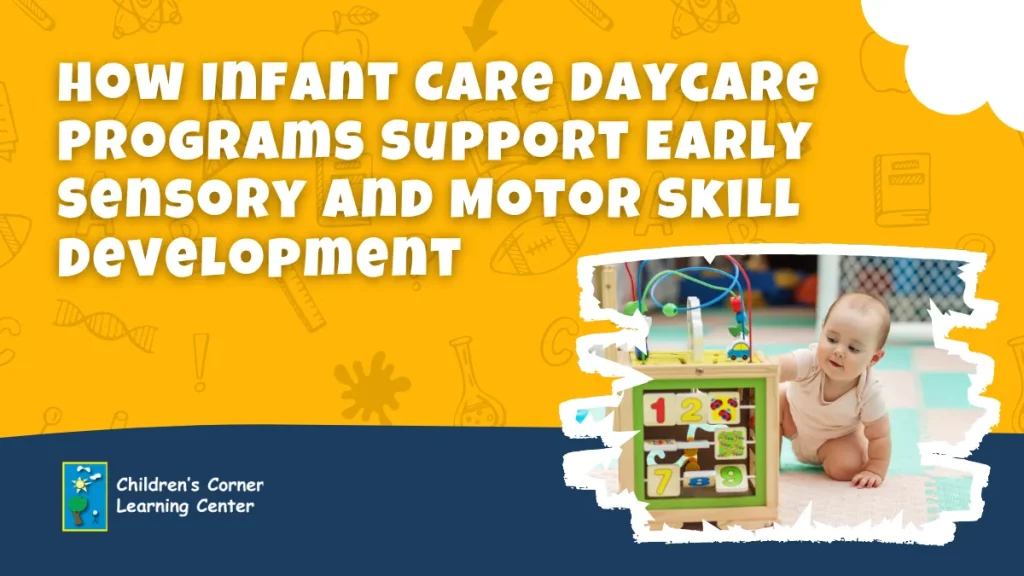
Infant care, daycare, and sensory-motor development play an important role in helping babies build the foundational skills they need for healthy growth. During the first year of life, infants learn through movement, touch, sound, sight, and everyday interaction with the world around them.
A high-quality infant care program provides a safe, nurturing environment where these early experiences are encouraged through age-appropriate activities, guided support, and responsive caregiving. From tummy time and grasping toys to listening to songs and exploring textures, each moment can support physical coordination and sensory awareness. These early milestones help lay the groundwork for future learning, confidence, and independence.
Why Sensory Experiences Matter In A Stimulating Environment Infant Daycare
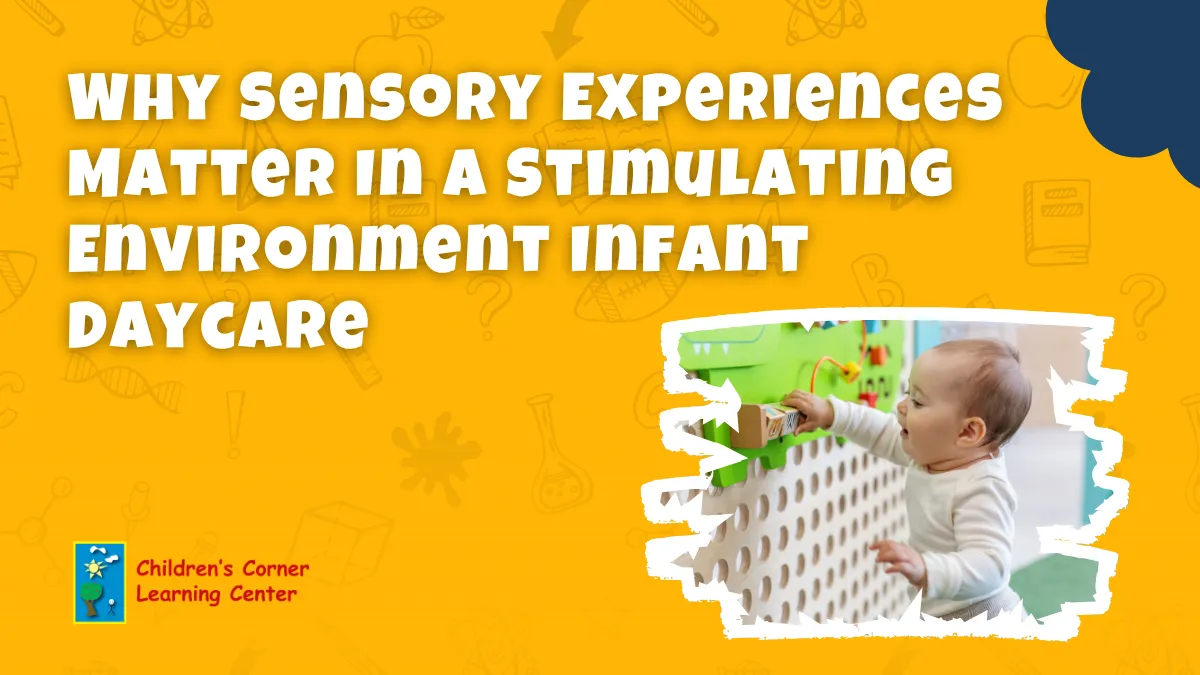
Sensory experiences are a meaningful part of early learning because infants begin understanding the world through what they see, hear, touch, and feel. In a stimulating infant daycare environment, these everyday moments of discovery help support healthy development in ways that feel natural, safe, and age-appropriate. With thoughtful guidance and a nurturing setting, sensory exploration can lay a solid foundation for future growth.
Sensory Learning Begins In Everyday Moments
Even in infancy, the simplest experiences can support development. Feeling a soft blanket, listening to a calm song, watching movement, or grasping a toy all help babies process new information. These moments introduce infants to their surroundings while helping them become more comfortable with exploration and routine interaction.
How Sensory Experiences Support Growth
Sensory activities do more than keep babies engaged. They help strengthen several important early skills, including:
- Visual tracking and focus
- Listening and sound recognition
- Hand-eye coordination
- Body awareness and movement response
- Curiosity and early problem-solving
As infants interact with their setting, they begin building the connections that support both physical and cognitive growth.
The Importance Of A Balanced Daycare Setting
A strong infant daycare program creates a calm, supportive atmosphere where sensory learning can occur throughout the day. Age-appropriate toys, soft textures, music, tummy time areas, and safe open spaces all help encourage healthy exploration. These experiences should feel intentional and comforting, not overwhelming, so that infants can engage at their own pace.
Responsive Caregivers Help Make Learning Meaningful
Caregivers play an essential role in helping infants benefit from sensory experiences. By paying attention to each child’s needs, comfort level, and developmental stage, they can guide activities that feel supportive and enriching. This kind of responsive care helps babies feel secure, which is an important part of learning and development.
In a nurturing daycare environment, sensory experiences help infants build confidence, awareness, and the foundational skills needed for healthy early growth.
How Early Childhood Motor Skills Activities Build Everyday Strength And Coordination
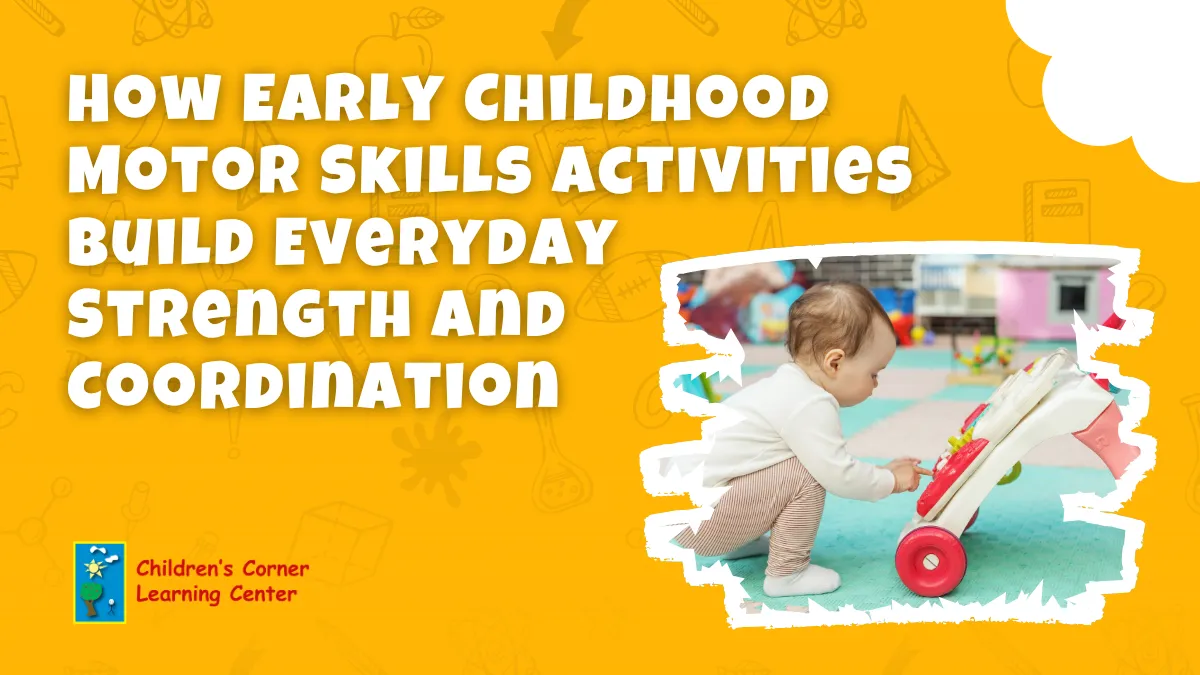
Early childhood motor skills activities help infants develop the strength and coordination needed for everyday movement. In a quality infant care setting, these activities are introduced through safe, age-appropriate experiences that support natural physical growth. As babies reach, kick, roll, grasp, and explore, they begin building the muscle control and body awareness that support future developmental progress.
Motor Skill Development Starts With Simple Movement
In infancy, small movements play an important role in physical development. Lifting the head during tummy time, stretching toward a toy, or learning to grip an object may seem simple, but each action helps strengthen growing muscles. These early efforts support both fine motor skills, which involve smaller hand and finger movements, and gross motor skills, which involve larger body movements.
Activities That Support Strength And Coordination
A strong infant daycare program includes daily opportunities for movement that help babies practice new skills in a safe and encouraging environment. These may include:
- Tummy time to strengthen the neck, shoulders, and core
- Reaching and grasping toys to support hand control
- Guided floor play to encourage rolling and crawling movements
- Sensory toys that invite touch, hold, and movement
- Supervised space for stretching, kicking, and exploring
These activities help infants improve control over their bodies while building confidence in movement.
Why Repetition And Routine Matter
Motor development happens gradually through repeated practice. When infants are given consistent opportunities to move throughout the day, they begin strengthening coordination in natural and meaningful ways. Repetition allows babies to become more familiar with how their bodies work, which supports smoother movement and better balance over time.
Caregivers Help Encourage Healthy Physical Growth
Responsive caregivers play an important role by introducing activities that match each infant’s developmental stage. With close supervision, encouragement, and a safe environment, they help babies explore movement without pressure. This support allows infants to practice new skills at their own pace while feeling secure and cared for.
Through thoughtful early childhood motor skills activities, infant daycare programs help children build the everyday strength and coordination that support healthy growth and future learning.
The Value Of Sensory Play For Babies in Childcare Programs In Supporting Developmental Milestones
Sensory play is an important part of early learning because it helps infants explore the world through touch, sound, sight, and movement. In quality childcare programs, these experiences are thoughtfully introduced to support developmental milestones in an infant program without overwhelming young children. When sensory play is guided in a safe, nurturing setting, it can help babies build confidence, awareness, and important early skills through everyday discovery.
Sensory Play Supports Early Development In Meaningful Ways
For infants, sensory play is more than simple entertainment. It encourages babies to observe, respond, and interact with their environment. Whether they are feeling a soft fabric, listening to gentle music, or watching a colorful object move, these moments help strengthen their ability to process and understand new experiences. Over time, this kind of exploration supports both physical and cognitive growth.
Developmental Milestones That Sensory Play Can Encourage
In a well-designed infant program, sensory play can help support several early milestones by giving babies regular opportunities to practice and respond. These may include:
- Reaching toward objects with intention
- Improving grip and hand control
- Tracking sounds and movement with the eyes
- Responding to familiar voices and textures
- Building body awareness through motion and touch
Each of these small steps contributes to larger patterns of healthy development.
Why Childcare Programs Matter In This Process
Childcare programs provide structured opportunities for infants to engage in sensory play in age-appropriate ways. Soft materials, textured toys, music, mirrors, floor play, and supervised exploration can all become part of a balanced routine. These environments help ensure that sensory experiences are both safe and purposeful, giving infants the chance to explore while feeling secure.
Caregiver Guidance Helps Infants Benefit More Fully
Responsive caregivers are essential in making sensory play meaningful. By paying close attention to each child’s needs and developmental stage, they can introduce calming, engaging, and supportive activities. In a nurturing environment, sensory play helps infants work toward developmental milestones while building comfort, curiosity, and confidence in the learning process.
How Daily Routines Encourage Physical Confidence And Body Awareness
Daily routines play an important role in helping infants feel secure, supported, and ready to learn through movement. In an infant daycare setting, consistent routines create natural opportunities for babies to practice using their bodies in safe and familiar ways. From floor play and diaper changes to feeding times and rest periods, these repeated moments help infants build physical confidence while becoming more aware of how their bodies move and respond.
Familiar Patterns Help Infants Feel Secure
Infants thrive when their day follows a predictable rhythm. Consistent routines help babies feel comfortable in their environment, which makes them more likely to engage, explore, and respond to the people and activities around them. When infants know what to expect, they can focus more fully on movement, interaction, and sensory experiences that support development.
Everyday Care Moments Support Body Awareness
Many aspects of daily routine can help infants strengthen body awareness in gentle, meaningful ways. For example:
- Tummy time helps babies practice lifting and turning
- Diaper changes encourage movement and stretching
- Feeding times support posture and coordination
- Floor play promotes reaching, kicking, and rolling
- Rest routines help infants regulate and recover
These repeated experiences help babies gradually understand how their bodies move in space and how they can respond to their surroundings.
Confidence Grows Through Repetition
Physical confidence develops over time as infants repeat small movements throughout the day. Each opportunity to stretch, grasp, roll, or shift position helps strengthen coordination and control. These familiar routines allow babies to practice skills without pressure, which supports steady growth and a stronger sense of comfort in movement.
Caregivers Create A Supportive Rhythm
Responsive caregivers help make routines feel calm, safe, and developmentally appropriate. By guiding infants through each part of the day with consistency and care, they create an environment where physical growth can happen naturally. In a nurturing infant program, daily routines do more than provide structure. They help children build body awareness, coordination, and the confidence to keep developing new skills.
Conclusion
Early sensory and motor development lays the foundation for so many future milestones, from physical coordination to confidence, curiosity, and everyday learning. In a high-quality infant care setting, babies benefit from safe exploration, responsive caregiving, and age-appropriate experiences that foster growth in a thoughtful, nurturing way. When families choose a program that values these early stages of development, they are giving their child the opportunity to build important skills in an environment designed to help them feel secure, supported, and encouraged each day.
To learn more about Children’s Corner and explore their infant care programs, book a tour today at https://childrenscornergroup.com/book-a-tour/ or call (845) 250-5492.