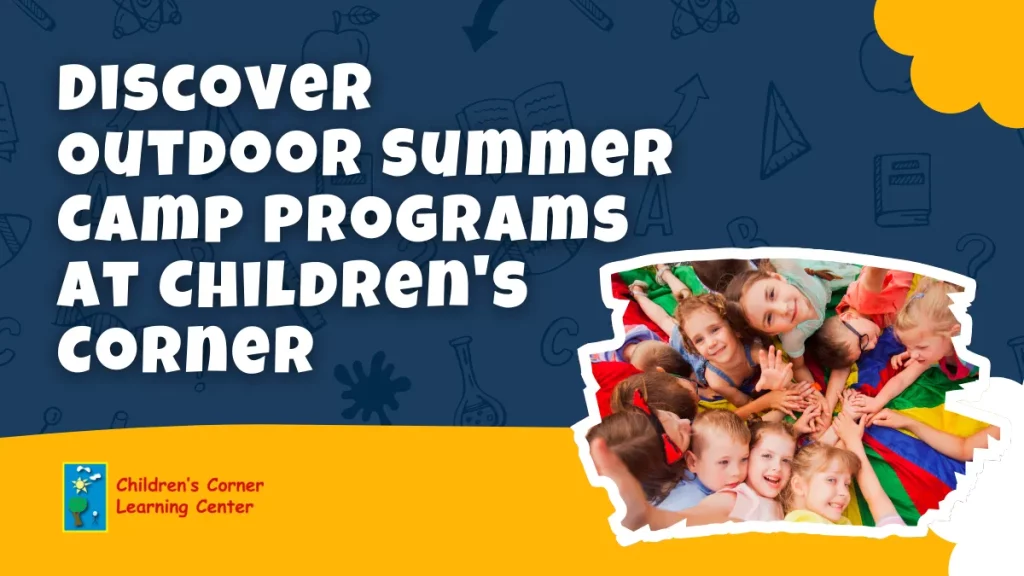
Outdoor summer camp programs at Children’s Corner provide children with opportunities to stay active, explore nature, and build confidence in a safe, supervised environment. With a focus on structured routines and engaging experiences, the program balances outdoor play with purposeful learning that supports social development and independence.
Children can enjoy movement-based games, group challenges, and hands-on discovery activities that keep each day meaningful and fun. For families seeking a summer option that combines reliable childcare with fresh-air adventure, Children’s Corner offers a supportive setting where children can grow, connect, and make lasting summer memories.
What To Look For In An Outdoor Summer Camp Near Me
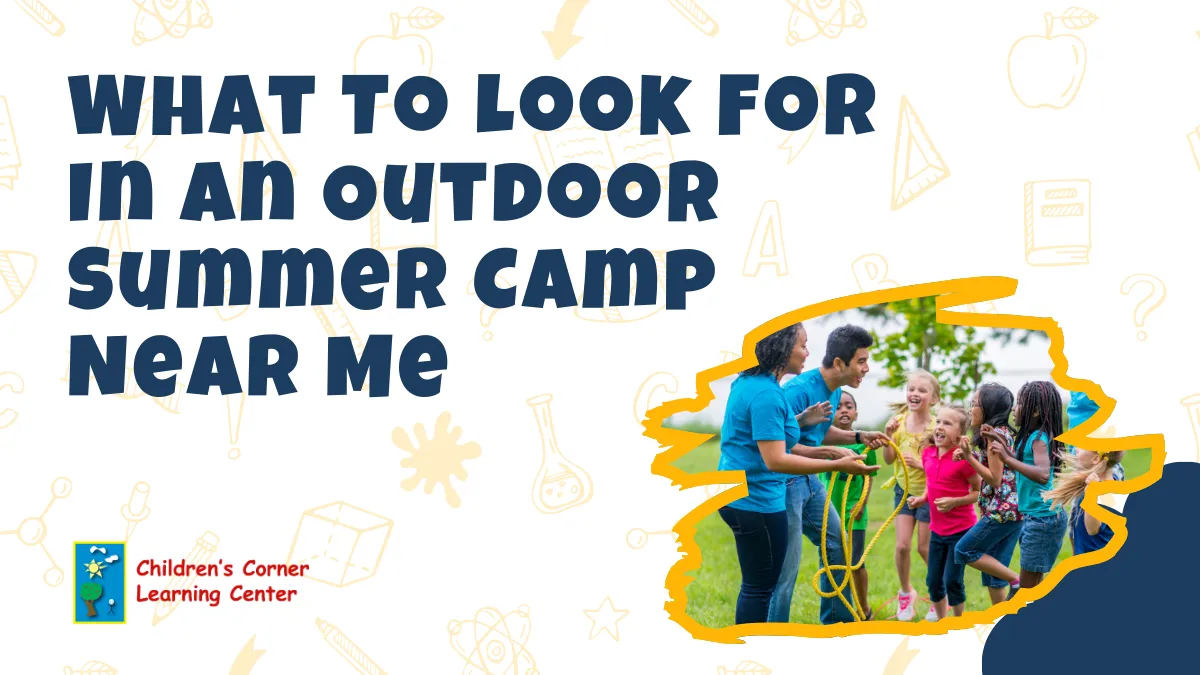
When searching for an outdoor summer camp near me, families often seek a program that offers active play in a safe environment, supported by clear routines and experienced supervision. Outdoor-focused camps can be an excellent choice, but the best fit depends on how the program balances structure, safety, and meaningful activities.
A Daily Schedule That Keeps Children Regulated
Outdoor time is most successful when it is organized. A consistent rhythm helps children transition smoothly between active play, enrichment, meals, and rest. Ask for a sample schedule to understand how the day is managed and how children are supported as energy levels change.
Look for a schedule that includes:
- Planned outdoor activity blocks rather than unstructured long periods
- Regular hydration and shade breaks
- Calm transitions such as story time, art, or quiet play
- Lunch and rest time are appropriate for the age group
Safe Outdoor Spaces And Clear Supervision
Outdoor play should feel exciting, but it must also be carefully supervised. Evaluate the condition of outdoor areas and ask how staff manage safety during movement games, exploration, and warmer weather days.
Key safety indicators include:
- Defined play zones and clear boundaries
- Age-appropriate equipment in good condition
- Consistent headcounts and active supervision throughout the day
- Sun protection practices and weather guidelines
Activities That Offer Variety And Purpose
A strong outdoor camp includes more than playground time. The best programs offer a mix of movement, nature learning, and group activities that help children stay engaged while building social and developmental skills.
Ask about enrichment options such as:
- Obstacle courses, relay games, and cooperative challenges
- Nature walks, scavenger hunts, and garden activities
- Hands-on projects inspired by weekly themes
- Creative stations that balance high-energy play with calmer focus
Communication And Family Support
Parents benefit from clear updates, consistent policies, and easy access to staff when questions come up. Camps that communicate well help families feel confident throughout the summer.
Helpful communication practices include:
- Clear drop-off and pick-up routines
- Updates about daily activities and special events
- Guidance on what to pack and how to prepare
The right outdoor summer camp near me provides a structured, safe environment where children can move, explore, and build confidence. When routines are clear and activities are thoughtfully planned, outdoor camp days become both enjoyable and genuinely supportive of healthy development.
Why A Nature Summer Camp For Kids Supports Healthy Growth

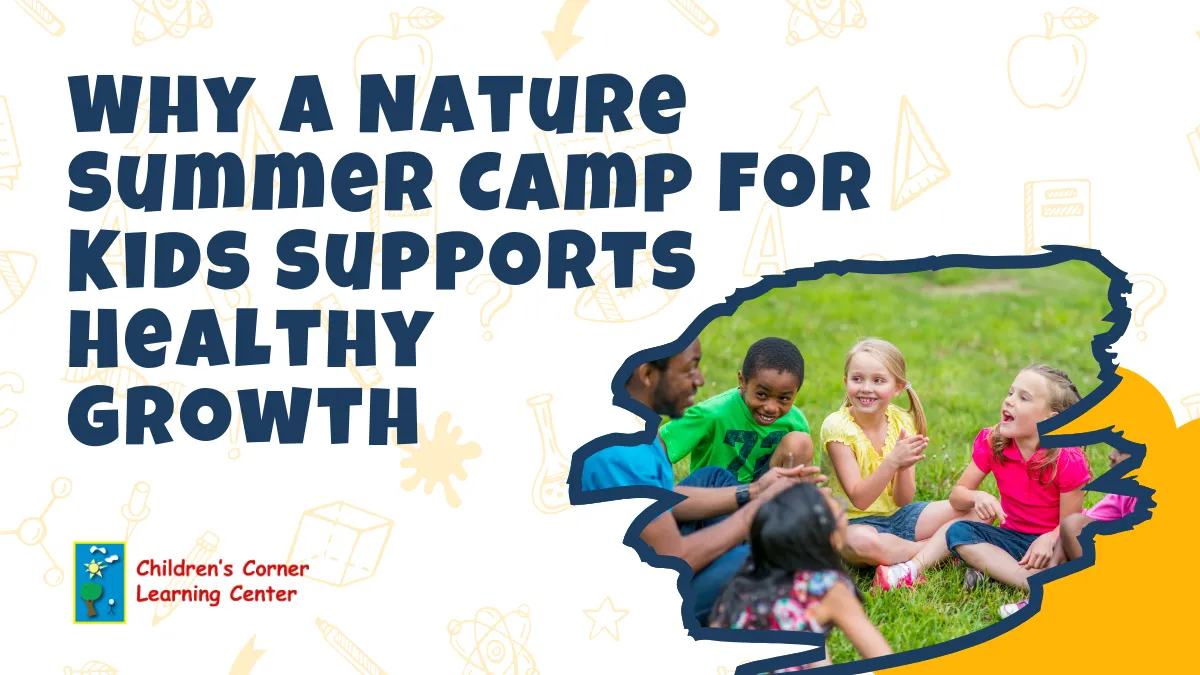
A nature-based summer camp for kids supports healthy growth by providing daily opportunities to move, explore, and learn in a calm, engaging environment. Time outdoors strengthens physical development, encourages curiosity, and supports social and emotional skills that carry into the school year. When nature-based experiences are paired with consistent routines and attentive supervision, children benefit from both freedom and structure.
Physical Development Through Natural Movement
Outdoor environments invite active play that builds strength, coordination, and endurance. Uneven surfaces, open spaces, and movement-based games encourage children to practice balance and body awareness naturally.
Nature-based movement often includes:
- Hiking walks with safe boundaries and rest breaks
- Obstacle courses using cones, logs, or stepping paths
- Ball games and relay activities that support teamwork
Emotional Regulation And Confidence Building
Nature can help children reset. Outdoor play supports emotional regulation by reducing restlessness and giving children space to release energy. Children also build confidence when they take on small, age-appropriate challenges, such as completing a scavenger hunt or learning to care for a garden bed.
Confidence grows when children can:
- Try new tasks with supportive coaching
- Make choices within clear expectations
- Experience success through effort and persistence
Curiosity, Observation, And Early Learning
Nature offers learning opportunities that feel natural and enjoyable. Children ask questions, notice patterns, and make connections through hands-on discovery. A strong camp program builds on these moments with simple prompts and guided activities that support vocabulary and critical thinking.
Examples of purposeful nature learning:
- Bug and leaf exploration with magnifiers
- Weather tracking and simple charting
- Nature journals with drawings and labeled observations
Social Skills Through Shared Experiences
Outdoor exploration encourages cooperation. When children work in small groups, they practice listening, taking turns, and problem-solving together. Shared discoveries often create stronger friendships and a greater sense of belonging.
A nature summer camp for kids supports growth across multiple areas by combining movement, discovery, and consistent routines. With the right structure, outdoor experiences become a valuable foundation for healthy development, confidence, and meaningful learning.
How Active Summer Camps For Children Build Confidence And Skills
Active summer camps for children build confidence and skills by combining movement, structure, and positive social experiences in a setting designed for growth. When children participate in age-appropriate physical activities with supportive coaching, they develop stronger coordination, greater independence, and a healthier sense of self. A well-planned active camp also helps children practice communication and teamwork in ways that feel natural and enjoyable.
Confidence Through Safe Challenges
Children gain confidence when they are encouraged to try new activities and experience progress over time. Active camps often use simple challenges that are exciting yet achievable, which help children build resilience and pride in their efforts.
Confidence-building activities may include:
- Obstacle courses with balance, climbing, and jumping stations
- Relay races that emphasize participation and teamwork
- Skill-based games that allow children to improve at their own pace
Physical Skills That Support Healthy Development
Movement supports gross motor development, strength, and body control. Camps that include a variety of active games help children practice coordination while improving endurance and balance.
Key physical skills supported at active camp:
- Balance and stability through climbing, stepping, and hopping activities
- Coordination through ball games, parachute play, and multi-step movement
- Spatial awareness through group games with clear boundaries and rules
Social Skills Built Through Team Activities
Active camps provide daily opportunities for children to learn how to cooperate, take turns, and manage big feelings during group play. Staff guidance is important, especially when teaching children how to resolve conflicts respectfully and stay engaged when outcomes do not go their way.
Team-based experiences often strengthen:
- Listening and following directions in a group
- Patience and turn-taking
- Encouraging peers and accepting support
Focus and Self-Regulation Through Routine
Physical activity supports attention and self-regulation, especially when combined with a predictable schedule. Many camps alternate high-energy games with calmer transitions, which helps children reset and remain engaged throughout the day.
A balanced active camp day often includes:
- Active play blocks with planned water and shade breaks
- Calm transitions such as story time, art, or quiet games
- Consistent routines for arrival, meals, and pick-up
Active summer camps for children support meaningful growth by helping campers feel capable, connected, and motivated. With consistent supervision and a positive structure, children leave camp with stronger skills and greater confidence in what they can do.
Nature Exploration And Environmental Learning Experiences
Nature exploration and environmental learning experiences help children develop curiosity, respect for the outdoors, and early science skills through hands-on discovery. When learning is active and guided, children stay engaged while building observation skills, expanding their vocabulary, and deepening their understanding of the world around them. The most effective camp experiences keep expectations clear, provide safe boundaries, and allow children to explore in ways that feel exciting and achievable.
Guided Nature Walks With Purpose
Nature walks are more meaningful when children have a simple goal. Staff can introduce a focus for the day, encourage questions, and help children notice details they may otherwise miss.
Ideas for purposeful nature walks include:
- Looking for colors, shapes, and patterns in leaves and flowers
- Identifying birds, insects, and other local wildlife from a picture guide
- Listening walks where children name sounds they hear and where they come from
Hands-On Discovery Stations
Stations allow children to explore at their own pace while still learning key concepts. Rotating through stations also supports attention and behavior, as children stay active and engaged.
Effective nature stations may include:
- Magnifying exploration with leaves, bark, rocks, and safe insects
- Sorting collections by size, texture, and color
- Simple experiments such as soil and water observation, floating objects, or evaporation tracking
Gardens and Plant-Based Learning
Children learn responsibility and patience when they care for living things. Garden-based activities can be adapted for different ages, from planting seeds to harvesting and washing produce with supervision.
Garden learning can include:
- Planting and watering routines
- Comparing plant growth over time with simple charts
- Discussing what plants need to grow and why it matters
Environmental Awareness in Age-Appropriate Ways
Environmental learning should feel positive and practical. Small daily habits help children understand that caring for the environment is something they can do.
Simple environmental lessons that work well at camp:
- Recycling games that teach sorting and responsibility
- Reusing materials for art and building projects
- Practicing “leave it better” clean-up routines after outdoor activities
Nature exploration and environmental learning experiences support growth across physical, cognitive, and social development. With consistent supervision and thoughtful planning, children gain knowledge, confidence, and a stronger connection to the natural world.
Conclusion
Outdoor summer camp programs can offer far more than time outside. When children have consistent routines, active movement, and guided nature exploration, they build confidence, strengthen physical skills, and develop curiosity that supports learning well beyond the summer months. A program that balances structured supervision with meaningful outdoor experiences can help children feel capable, connected, and excited to return each day. For families seeking a summer option that supports healthy growth, an outdoor-focused camp can be an excellent choice.
Explore outdoor summer camp programs at Children’s Corner. Call (800) 933-7757 or book a tour here: https://childrenscornergroup.com/book-a-tour/.