
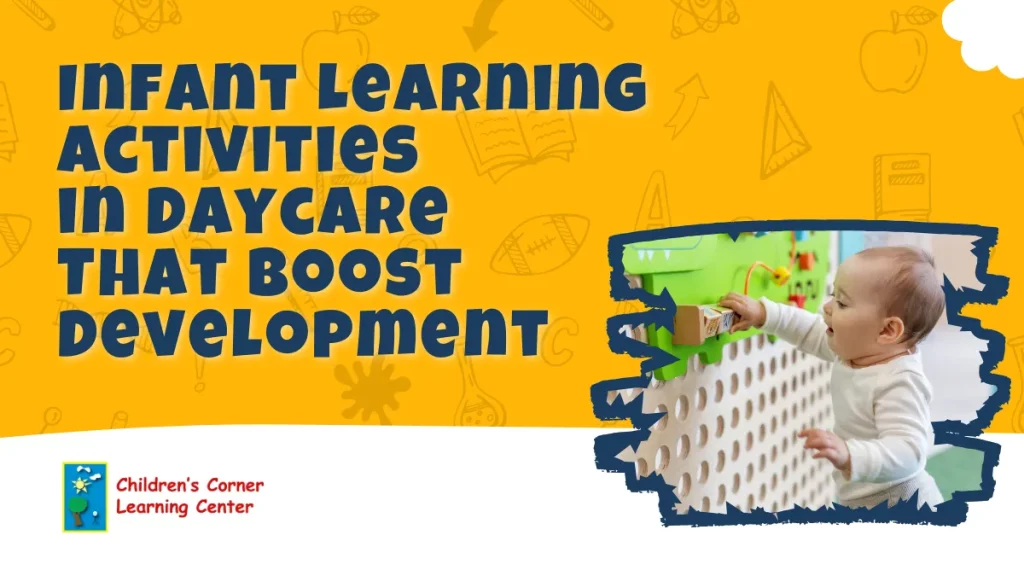
Infant learning activities in daycare play an important role in supporting early development during a child’s first year. These experiences are designed to strengthen communication, movement, sensory exploration, and emotional security through gentle, age-appropriate interaction.
In a quality daycare setting, infants learn through daily routines, responsive caregiving, and safe opportunities to explore their environment. Activities such as tummy time, music, simple language exposure, and sensory play help build early brain development while encouraging curiosity and engagement. When guided by trained caregivers, these moments create a strong foundation for healthy growth and future learning.
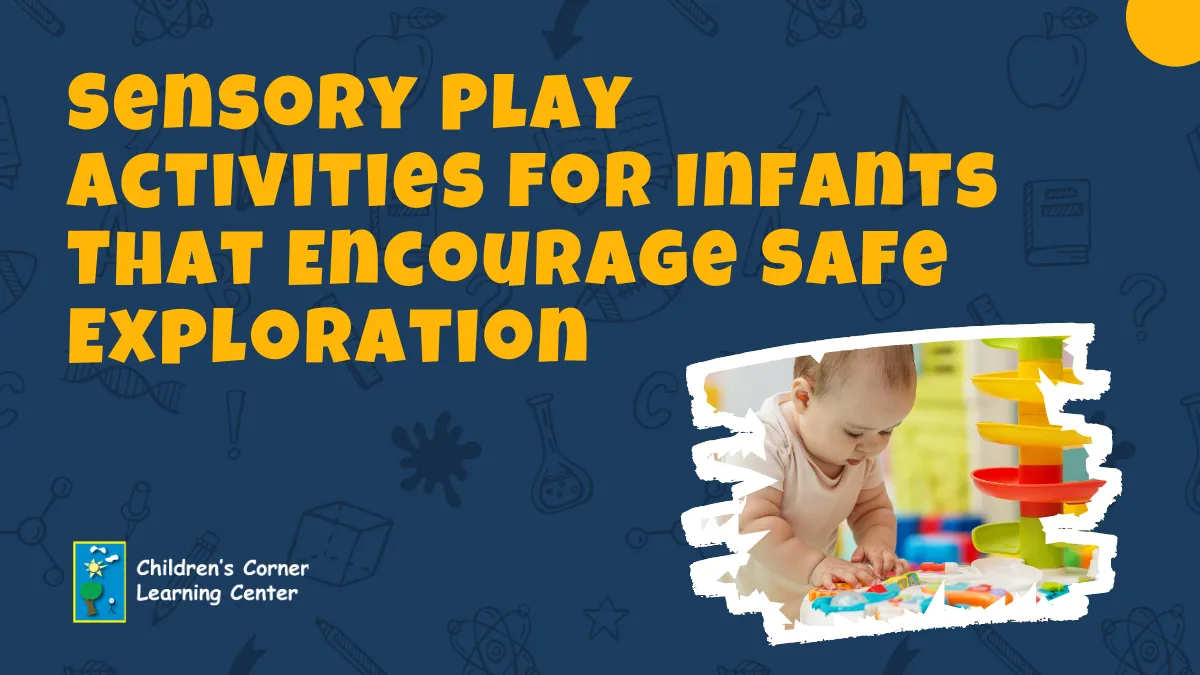 Sensory play supports early brain development by helping infants learn through sight, sound, touch, and movement. In a daycare setting, these experiences are carefully planned to be safe, gentle, and age-appropriate. The goal is not overstimulation, but meaningful interaction that helps infants build curiosity, focus, and comfort in their environment.
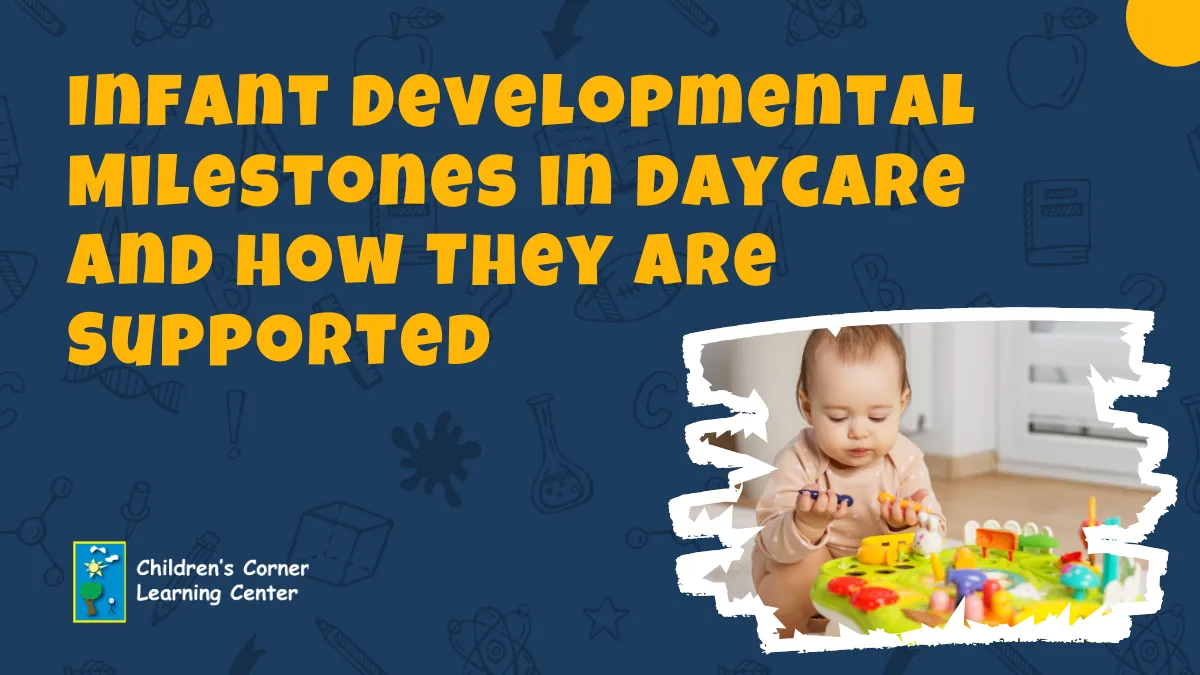
Infant Developmental Milestones in Daycare and How They Are Supported
Infants grow quickly during the first year, and a high-quality daycare environment supports that growth through consistent routines, responsive caregiving, and developmentally appropriate activities. While every child develops at their own pace, daycare settings provide daily opportunities to practice essential skills through safe exploration, movement, and meaningful interaction. With trained caregivers guiding each stage, infants receive the support they need to build confidence, security, and healthy early development.
Sensory Play Activities for Infants That Encourage Safe Exploration
Sensory play supports early brain development by helping infants learn through sight, sound, touch, and movement. In a daycare setting, these experiences are carefully planned to be safe, gentle, and age-appropriate. The goal is not overstimulation, but meaningful interaction that helps infants build curiosity, focus, and comfort in their environment.
Safe Exploration Through Touch, Texture, and Sound
Infants learn by feeling different textures and noticing how objects respond when touched or moved. Teachers introduce simple sensory materials that are clean, soft, and easy to grasp, allowing infants to explore at their own pace. These experiences support fine motor skills, coordination, and early problem-solving. Common sensory materials and activities may include:- Soft fabric squares with different textures
- Crinkle paper and baby-safe rattles
- Grasping toys that encourage reaching and holding
- Floor-based play that supports rolling and stretching
Visual Stimulation and Early Focus Skills
Visual sensory play helps infants strengthen focus and attention as their vision develops. Daycare environments often include high-contrast images, soft lighting, and colorful objects that encourage tracking and visual engagement. Teachers may gently move objects across an infant’s line of sight to support visual tracking or use mirrors to promote recognition and curiosity. Visual activities may include:- Looking at contrast cards during quiet time
- Tracking a soft toy during tummy time
- Exploring reflections in a safe, unbreakable mirror
- Watching bubbles or gentle movement toys
Sensory Routines That Support Comfort and Security
Sensory play is also built into daily routines that help infants feel calm and secure. Gentle music, soothing voices, and predictable caregiving create a nurturing environment where infants can explore without stress. Sensory experiences during routines, such as warm water during handwashing or gentle massage during diaper changes, support emotional regulation and strengthen caregiver bonds. When sensory activities are intentional and consistent, infants develop confidence in their surroundings while building early skills that support movement, attention, and healthy social-emotional growth.Infant Developmental Milestones in Daycare and How They Are Supported

Infants grow quickly during the first year, and a high-quality daycare environment supports that growth through consistent routines, responsive caregiving, and developmentally appropriate activities. While every child develops at their own pace, daycare settings provide daily opportunities to practice essential skills through safe exploration, movement, and meaningful interaction. With trained caregivers guiding each stage, infants receive the support they need to build confidence, security, and healthy early development.
Social-Emotional Growth Through Responsive Care
One of the most critical milestones in infancy is learning to trust and feel secure. In daycare, caregivers build this foundation by responding to cries, providing comfort, and creating predictable routines. Infants begin developing early attachment, emotional regulation, and social awareness through consistent, nurturing interaction. Support may include:- Calm soothing during transitions and feeding
- Familiar routines that help infants feel secure
- Gentle face-to-face engagement and eye contact
- Encouraging early social connection through smiles and vocal response
Movement and Motor Skill Development
Daycare programs support physical development by providing infants with a safe space and time to strengthen their bodies. Tummy time, reaching for toys, rolling, and assisted sitting all help build core strength and coordination. As infants grow, activities support crawling, pulling up, and early standing skills in a supervised, movement-focused environment. Developmental support often includes:- Daily tummy time to strengthen neck and shoulder muscles
- Floor play to encourage reaching, grasping, and rolling
- Soft climbing and safe movement zones for early mobility
- Age-appropriate toys that build coordination and control
Early Communication and Language Recognition
Even before infants speak, they learn communication through sound, expression, and response. A strong daycare setting supports language development through constant conversation, singing, reading, and responsive interaction. Teachers describe routines, repeat simple words, and engage infants through facial expressions and tone, helping them recognize language patterns and develop early understanding. Language and communication support may include:- Talking through diaper changes, meals, and play routines
- Daily storytime with simple images and repetition
- Songs and rhymes that build recognition and memory
- Encouraging babbling through back-and-forth interaction
Early Learning Activities for Babies That Build Strong Foundations
Early learning for babies is built through simple, consistent experiences that support attention, communication, movement, and curiosity. In a daycare setting, these activities are designed to be gentle and developmentally appropriate, helping infants learn through routine interactions and safe exploration. While babies are not learning through structured lessons, they are constantly building important skills through play, caregiving, and guided engagement. The strongest infant programs use everyday moments to support development in a calm, nurturing way.Music, Storytime, and Language Exposure
Babies learn language long before they can speak. Hearing words, rhythm, and tone helps strengthen early listening and recognition skills. Caregivers support this by reading simple books, singing throughout the day, and talking through routines in a clear, warm voice. Over time, babies begin responding with facial expressions, babbling, and increased attention. Common activities include:- Short read-alouds with high-contrast pictures
- Songs and fingerplays with repetition
- Naming objects and describing actions during play
- Encouraging early turn-taking through vocal response
Tummy Time and Strength-Building Play
Movement-based learning is essential during infancy because physical development supports coordination, confidence, and brain growth. Tummy time helps babies strengthen neck, shoulder, and core muscles, which support later milestones like rolling, sitting, and crawling. Daycare environments often include soft mats and safe floor spaces that encourage movement while allowing infants to explore at their own pace. Strength-building activities may include:- Tummy time with mirrors or soft toys for engagement
- Reaching and grasping practice during floor play
- Rolling support through guided movement and positioning
- Safe stretching and movement games led by caregivers
Simple Cause-and-Effect Experiences
Babies begin understanding how their actions create results, which supports early thinking and problem-solving. Cause-and-effect activities help infants build focus and curiosity as they learn to interact with their environment. These experiences are often sensory-based and repeated frequently, allowing babies to learn through consistency and exploration. Examples of cause-and-effect learning include shaking a rattle, pressing a soft button to make a sound, or watching a toy move after being touched. Caregivers guide these moments with encouragement, helping babies stay engaged without becoming overstimulated. When early learning activities are consistent, calm, and responsive, babies lay the foundations for future learning. These experiences build confidence, strengthen key skills, and provide a strong foundation for toddler development and long-term growth.Daily Care Routines That Strengthen Infant Learning and Attachment
Daily routines are more than basic care in an infant daycare setting. Feeding, diapering, naps, and transitions are meaningful learning moments that help infants feel secure while building early communication, trust, and awareness of the world around them. When caregivers are consistent and responsive, infants begin to recognize patterns, feel emotionally supported, and develop stronger attachment through predictable, nurturing interaction.Consistent Routines That Build Trust
Infants thrive when their day follows a steady rhythm. Regular routines help babies anticipate what comes next, which supports emotional regulation and comfort. Over time, infants become more relaxed during transitions because they feel safe and supported. In high-quality daycare environments, caregivers meet each child’s individual needs while maintaining a consistent structure throughout the day. Trusted routines often include:- Predictable feeding and rest schedules
- Calm transitions between activities
- Familiar cues, such as a song before nap time
- Repeated comfort strategies that reduce stress
One-on-One Interaction and Engagement
Individual attention is essential for infant development. Caregivers strengthen attachment by holding, talking, and making eye contact throughout the day. During routines like feeding or diapering, one-on-one engagement supports bonding while helping babies build early social understanding. Infants learn that their needs are noticed and met, which supports long-term emotional security. This interaction may include:- Gentle conversation during care routines
- Responsive smiles and vocal imitation
- Comforting touch when babies feel unsettled
- Guided play that encourages attention and connection