
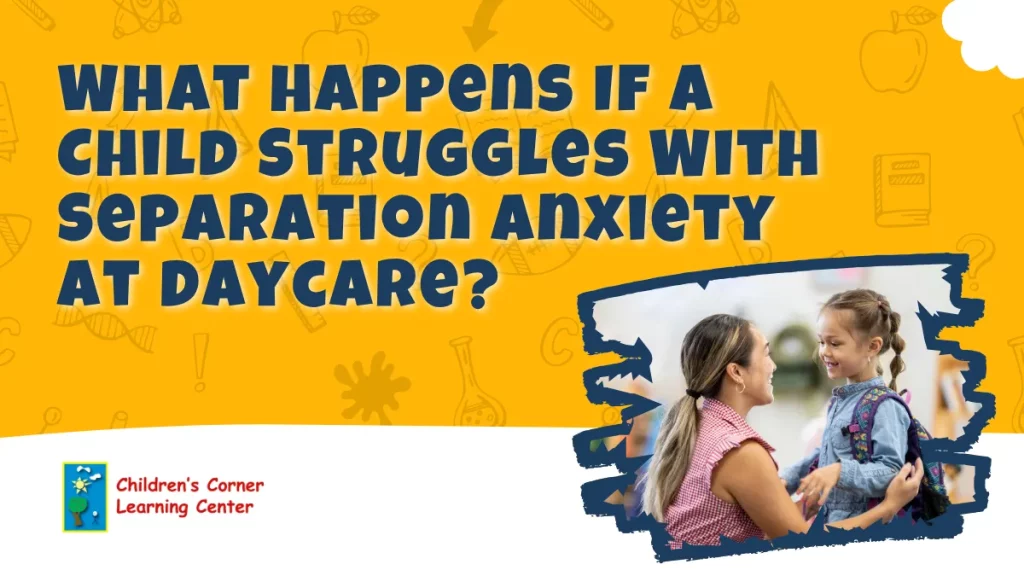
Separation anxiety at daycare is common, especially during the first weeks of enrollment or after a schedule change. For many children, it reflects a healthy attachment and a normal adjustment to a new environment, new caregivers, and new routines.
A supportive daycare program anticipates these emotions and uses consistent, gentle strategies to help children feel safe and settled. With the right approach, most children begin to build trust, participate more comfortably, and recover from drop-off tears faster over time. Understanding what to expect and how staff typically respond can help families feel more prepared and confident.
How Daycare Handles Separation Anxiety During Drop-Off
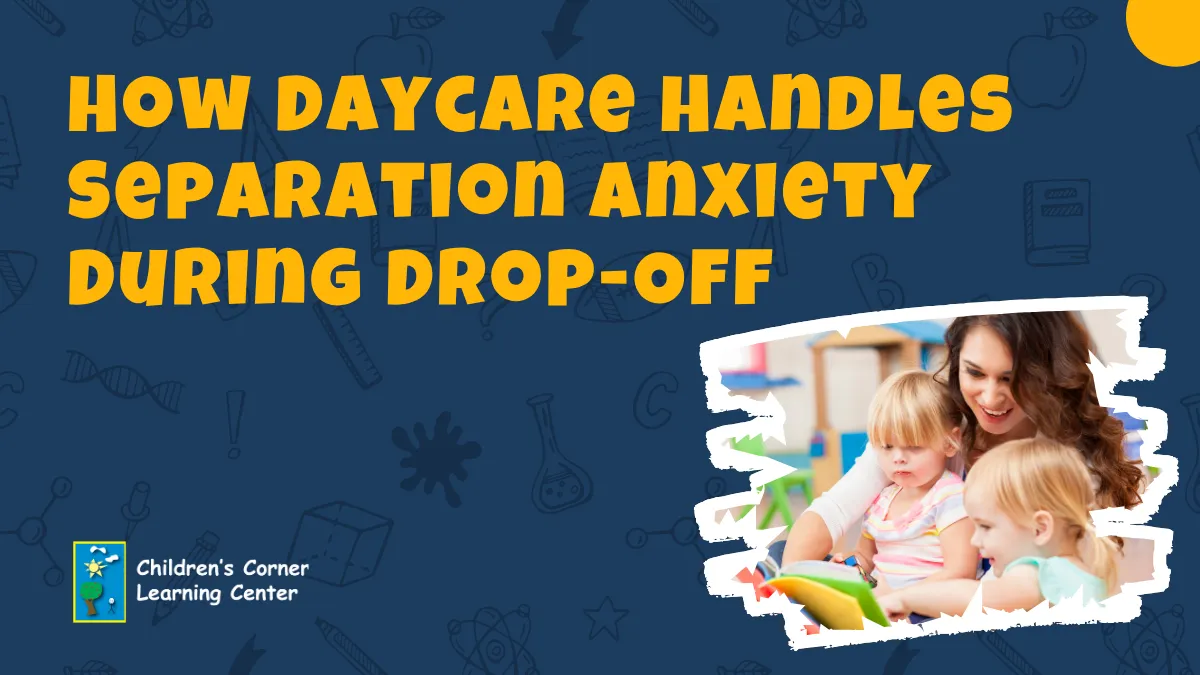
Separation anxiety can look different for every child. Some children cry at the door, others cling tightly, and some become quiet or withdrawn. A supportive daycare team responds with calm structure, consistent routines, and steady reassurance so the child learns that drop-off is safe and predictable.
A Calm, Consistent Welcome
Most centers follow a familiar arrival routine to reduce uncertainty. A teacher may greet your child by name, guide them to a preferred activity, and offer a simple choice to help them feel a sense of control. Calm transitions matter, so staff typically keep their tone steady and their steps consistent each morning.
Quick, Supportive Hand-Off Practices
Long goodbyes often increase distress, so many programs encourage a short, confident hand-off. Teachers may suggest a brief goodbye routine, then take over with reassurance and immediate engagement. The goal is not to rush feelings, but to reduce the length of uncertainty and move the child into a supportive classroom rhythm.
Helpful strategies often include:
- A consistent goodbye phrase and a predictable routine
- A comfort item that is allowed by policy
- A preferred job, such as holding a book or placing a backpack away
Comfort And Engagement After The Parent Leaves
Once the parent has left, teachers focus on connection and regulation. They may hold the child, sit nearby, offer sensory materials, or invite the child into a quiet area until breathing and body language settle. Many children calm significantly when engaged with a familiar teacher and a familiar activity.
Communication With Families
Strong centers communicate clearly during the adjustment period. A teacher or director may offer a brief update after the child settles, share patterns they notice, and suggest a plan for the next drop-off. When families and staff use the same approach consistently, children often adjust more quickly.
When The Team Adjusts The Plan
If a child continues to struggle, staff may recommend a gradual transition, a consistent drop-off person, or a change in timing to support a smoother start. A thoughtful approach focuses on trust-building rather than pressure so that the child can develop confidence in the daycare environment.
Helping Toddlers Adjust To Daycare With Consistent Routines
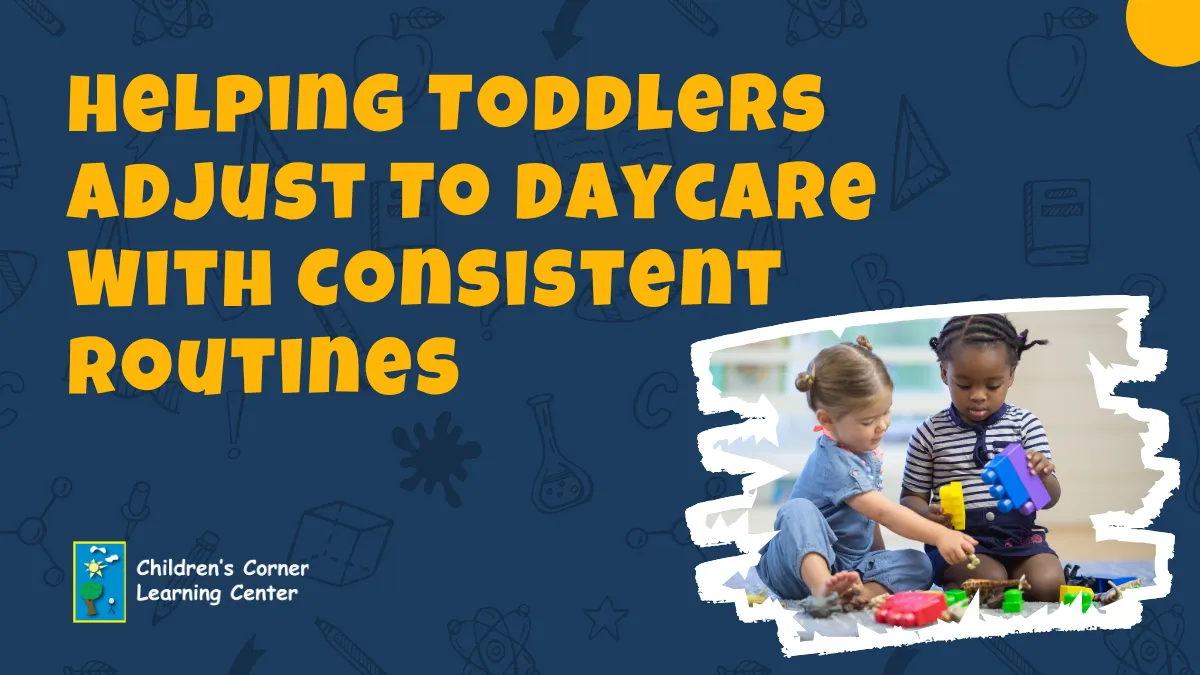
Toddlers thrive when their day feels predictable. Consistent routines reduce uncertainty, support emotional regulation, and help children understand what comes next. When a toddler is adjusting to daycare, structure becomes a form of reassurance. The same sequence of events, the same expectations, and the same caregiver responses help children build trust and confidence over time.
Predictable Morning Patterns
A consistent arrival routine helps toddlers move from home to the classroom more smoothly. Many centers use familiar steps such as greeting, washing hands, putting belongings away, and choosing a first activity. This routine signals that the day has started and the environment is safe. At home, using the same wake-up, breakfast, and departure rhythm can also reduce morning stress.
Simple Goodbyes And Clear Expectations
Toddlers often struggle most with uncertainty at the moment of separation. A short goodbye that happens the same way each day can be comforting, even when emotions are big. A teacher may guide the child to a preferred activity immediately after the goodbye so the toddler has a clear next step.
Helpful routine tools include:
- A brief goodbye phrase used consistently
- One comfort item, if the center allows it
- A predictable “first activity,” such as books, sensory bins, or puzzles
Familiar Classroom Rhythms Throughout The Day
Consistency continues after drop-off. Toddlers adjust more quickly when meals, naps, outdoor play, and transitions occur in a steady pattern. Teachers often use songs, visual cues, and simple language to prepare children for what is coming next. When toddlers know what to expect, they are more likely to participate calmly and recover faster from emotional moments.
Consistent Responses To Big Feelings
Routines are most effective when adult responses are steady. Teachers typically acknowledge feelings, offer comfort, and redirect the child toward a calming activity or a familiar classroom job. Over time, toddlers learn that emotions are supported, and the day continues safely.
Family And Teacher Alignment
Adjustment improves when home and daycare use similar expectations. Ask what phrases and strategies teachers use so you can mirror them at home. Consistent language, sleep schedules, and drop-off routines can help toddlers feel secure in both environments.
Daycare Transition Process: What To Expect In The First Weeks
The first weeks of daycare are an adjustment period for most children and families. Even when a child has been in group settings before, a new classroom brings new faces, routines, and expectations. A clear transition process helps children build trust, learn the daily rhythm, and feel more comfortable over time.
Week One: Getting Oriented
During the first several days, many children observe more than they participate. You may see stronger emotions at drop-off, changes in appetite, or more fatigue after daycare. This is a normal response to new stimulation and social demands. Teachers often focus on building connections through calm interactions, familiar activities, and consistent comfort.
Week Two: Building Familiarity And Participation
As the classroom becomes more predictable, many children begin to engage more confidently. They may still have tears at drop-off, but recovery is often quicker. Children often begin forming bonds with one or two caregivers and connecting with peers through parallel play, simple routines, and shared activities.
Common signs of progress include:
- Settling more quickly after arrival
- Joining in play for short periods
- Accepting comfort from teachers
Week Three And Beyond: Strengthening Confidence
Once routines feel familiar, children typically show more independence. They may start entering the classroom more willingly, talking about teachers or friends at home, and participating in group activities. Some children will still have occasional difficult mornings, especially after weekends, illness, or schedule changes. Progress is often gradual rather than linear.
How Teachers Support The Transition
During the early weeks, teachers often use predictable schedules, consistent language, and reassurance to reduce uncertainty. They may guide the child into a preferred activity, offer a classroom job, or create a calm space for regulation. Staff may also track patterns and share what helps the child recover best.
How Families Can Prepare For The First Weeks
A successful transition often depends on consistency between home and daycare. If possible, maintain steady sleep and morning routines, keep goodbyes brief, and avoid introducing multiple major changes at once. Regular communication with the classroom team can also help you understand your child’s progress and feel more confident during the adjustment period.
Why Separation Anxiety Happens And When It Is Most Common
Separation anxiety is a common part of early childhood development. It often appears when a child recognizes that a parent can leave, but does not yet fully understand when the parent will return. At daycare, this can show up as tears at drop-off, difficulty engaging right away, or strong protests during transitions. In most cases, it reflects healthy attachment and a child’s need for reassurance during change.
A Developmental Milestone, Not A Behavior Problem
Many children experience separation anxiety as their awareness and memory grow. They begin to notice routines, anticipate what happens next, and react when something feels unfamiliar. This is why separation anxiety is often more noticeable in toddlers, who are developing independence while still relying heavily on trusted caregivers.
Common Times Separation Anxiety Increases
Separation anxiety can appear at different ages, but it often intensifies during periods of growth or change. Daycare can also amplify it, as children adapt to new adults, peers, and expectations.
It is especially common during:
- The first weeks of enrollment or a classroom change
- After a long weekend, illness, or vacation
- When a parent’s schedule shifts or a new caregiver begins drop-off
- During developmental leaps such as language growth or increased mobility
Temperament And Previous Experiences Matter
Some children are naturally cautious in new settings and may take longer to warm up. Others adjust quickly but still have occasional setbacks. A child’s past experiences with separation, unfamiliar adults, and group routines can also influence how strongly they react at daycare.
What Separation Anxiety Can Look Like
Children express separation stress in different ways. Some cry immediately at drop-off, while others become quiet, clingy, or resistant to participating. You may also notice changes at home, such as extra neediness at bedtime, sleep disruptions, or more emotional reactions after daycare. These responses often improve as the child builds trust in the classroom and learns that daily goodbyes are temporary.
Conclusion
Separation anxiety at daycare can be stressful for families, but it is also a common and temporary part of early childhood adjustment. With consistent routines, supportive teachers, and clear communication, most children build trust in the classroom and begin to separate with more confidence over time. The most effective approach focuses on predictability, calm drop-offs, and a steady plan that supports the child’s emotional needs while reinforcing that daycare is a safe place. When families and staff work together, children are more likely to settle in, participate comfortably, and enjoy their day.
Want support with your child’s transition? Schedule a tour at https://childrenscornergroup.com/book-a-tour/ or speak with our team at (800) 933 7757.